
American Educator to Lead Laureate College of Tourism & Hospitality in Saudi Arabia
Saturday, 01 February 2014 03:00
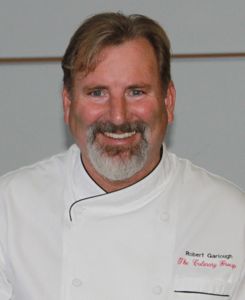 Robert Garlough’s goal is for graduates to become a source of intense pride to the Middle-Eastern kingdom’s foodservice and business communities and the college’s programs to be respected worldwide.
Laureate International Universities (LIU) announces longtime hospitality educator Robert Garlough, MS, HGT, has been appointed founding executive director of the new Laureate Tourism & Hospitality College of Excellence in Riyadh, Saudi Arabia. He was most recently president of The Culinary Group, a consulting firm to the foodservice and culinary-education community. Prior to that, Garlough served as the founding program director for the Hospitality Education Department (renamed the Secchia Institute for Culinary Education) at Grand Rapids Community College, where he worked for more than 30 years.
Garlough assumes his position during a time of great expansion and investment by the Kingdom of Saudi Arabia, which has instituted a multi-billion-dollar plan to build and operate “Colleges of Excellence” for Saudis seeking vocational-technical educations in a variety of skill areas. The KSA is embarking on one of the largest vocational and technical education reforms in the world, increasing its capacity from currently 110,000 students to more than 400,000 students by 2020.
A multi-stage tender process has been launched to select the best training providers for setting up and operating 26 new colleges in the kingdom. These colleges will be independently run by international providers and regulated, funded and overseen by the Colleges of Excellence Corporation on behalf of the Saudi government. New college buildings are provided, built with state-of-the-art designs and providing space for up to 2,000 students.
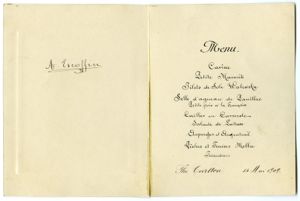 For the first time, researchers and campus visitors can now schedule appointments to view.
 Wondering and thinking about everything that is done in the kitchen—and considering how and why—are important behaviors we want to build in our students and encourage a stance of questioning.
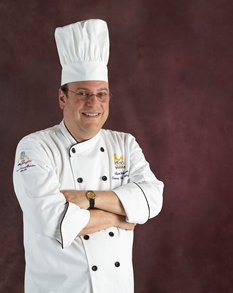 Chef Weiner’s dad has chemical-engineering degrees all over his wall, written hundreds of articles and flown around the world to advise companies, yet his cooking was never as good as that of Weiner’s grandmother, who only made it through the second grade.
 Are you preparing students to be kitchen and career ready?