
Anne Arundel Community College Culinary Students Win Two Trophies at Gumbo Fest
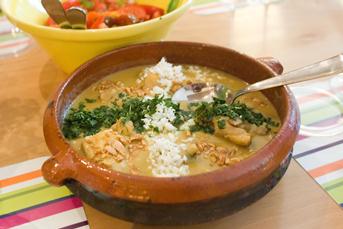
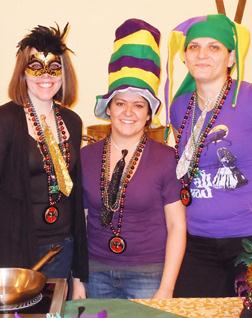 A team of Anne Arundel Community College culinary-arts students swept the competition at the 13th Annual Gumbo Fest in Annapolis. Team Anne Arundel won first place in both categories—the Judge’s Choice and People’s Choice—at the Feb. 26 competition at the Double Tree Hotel in Annapolis. Eleven other teams from area restaurants also competed in this year’s Gumbo Fest.
Team members included Stephanie Bishop (Arnold), Lora Pumphrey (Glen Burnie), Stephanie Silva (Belcamp) and Michael Willard (Annapolis). Proceeds of the event, which attracted about 400 members of the public, benefited the Light House homeless prevention support center in Annapolis.
“The secret to our winning recipe is the housemade andouille sausage and the four-hour roux,” said Chef John V. Johnson, CEC, CCE, AAC, an AACC instructional specialist and the Team Anne Arundel coach.
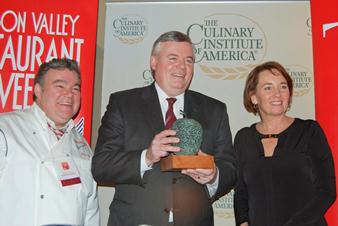 Dr. Tim Ryan, CMC, president of The Culinary Institute of America (CIA), is the recipient of The Valley Table magazine’s first Farm-to-Table Award recognizing leadership in the support of regional agriculture. The award was presented to Ryan at the Hudson Valley Restaurant Week launch event at the college on February 28, 2012.
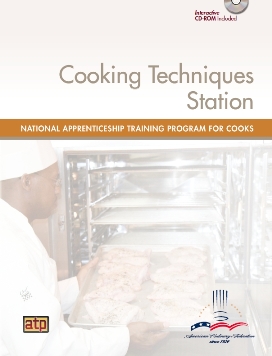 Do you want to teach your staff or students about a specific area of the professional kitchen? Are you looking for a comprehensive yet concise resource? If so, the American Culinary Federation’s (ACF) latest series, National Apprenticeship Training Program for Cooks, and its accompanying CD-ROM resources, is for you. Compiled and published by American Technical Publishers (ATP), the 10 modules are available for $25 each, with a 25% discount for purchases of five or more. A compiled textbook, containing content from each of the modules, is also available for $80.
 The recent Farming for the Future Conference promoted new ideas and learning to the benefit of all.
 Current and emerging trends as revealed at the 20th-annual Catersource Conference & Tradeshow in Las Vegas last month.
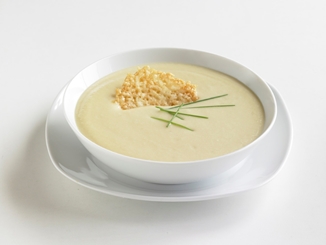 Restaurants show big growth in demand for soup and salad menu items, finds Technomic.
 Italian is so mainstream it might as well be considered American cuisine, reports Mintel. Meanwhile, growing interest in genuine ethnic fare aligns with a broader consumer trend, “The Real Thing.”
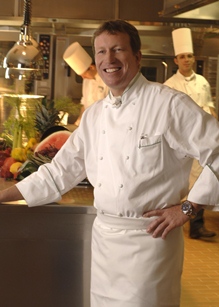 Charles Carroll’s proven techniques on how to retain staff and build an all-star team.