
McCamic of The Chef’s Academy Receives Wines of Australia Scholarship
 Mary Margaret McCamic, instructor of wine and communication studies at the Morrisville, N.C., campus of The Chef’s Academy (www.thechefsacademy.com), the Culinary Division of Harrison College, recently was awarded the prestigious Wines of Australia Scholarship.
The overall top-scoring graduates of the Wine & Spirit Education Trust’s (WSET) Diploma of Wine and Spirits (DWS) program of study in five markets—Canada, United States, Europe, Asia/Pacific and Ireland—are awarded the scholarship by Wines of Australia. McCamic completed her DWS studies, the highest level offered through WSET, last September and, based upon her overall results, was the nation’s top scorer to earn the designation as Wines of Australia’s 2011 United States representative.
McCamic is among nine scholarship recipients worldwide who gained a unique insight into the Australian wine industry with an eight-day study excursion last month. Prior to receiving the competitive award, McCamic earned her bachelor’s degree in English and creative writing and her master’s degree in teaching from the University of North Carolina at Chapel Hill. As she was settling into her career as a high-school English teacher, McCamic developed a passion for wine, leading her to study at New York’s International Wine Center in Manhattan, where she completed her WSET wine courses, one of the most challenging courses of wine study in the United States.
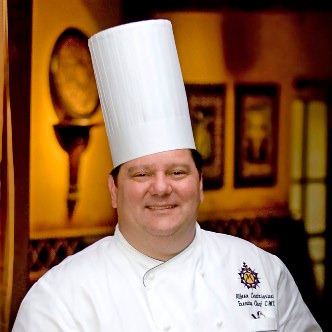 Alfonso Contrisciani, CMC, recently joined the Hocking College McClenaghan Center for Hospitality Training in Nelsonville, Ohio. Contrisciani has 32 years of culinary experience, including orchestrating several presidential dinners in Washington, D.C., as well as President Obama’s Inaugural Balls, and has been featured on Food Network.
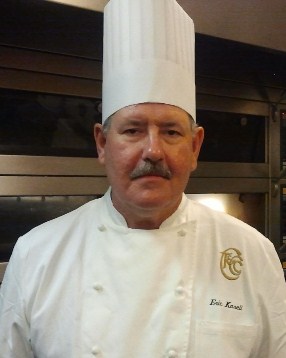 A member of the American Culinary Federation’s chapter in Atlanta lauds the personal and professional value of attending a well-developed and executed monthly meeting.
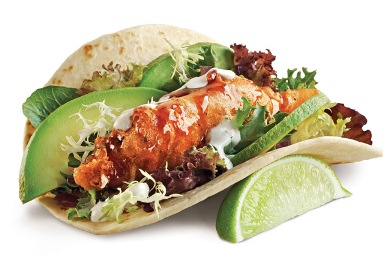 As revealed at this year’s IACP Conference in New York, on the map, but off the beaten path, is where today’s food trends are emerging.
 National advisory board recommends a more-modern approach to culinary education for the 16 schools in the United States.
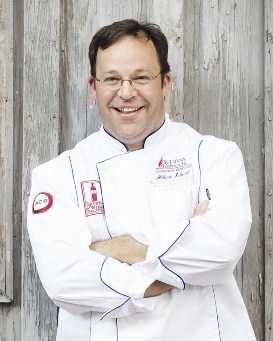 Many students arrive for class thinking they don’t need to know about beverage because they deal with food. Here’s why they’re wrong.
 At The Culinary Institute of America, a final-semester project to plan and execute an event marketed to the public is one of the most rewarding parts of students’ educations.
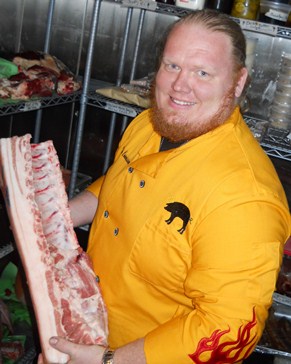 Dylan Lipe of Sweet Baby Ray’s Restaurants & Catering was born to barbecue.
 Because the culinary and foodservice industries are very small, helping students learn how to establish personal relationships with their peers becomes part of our jobs.
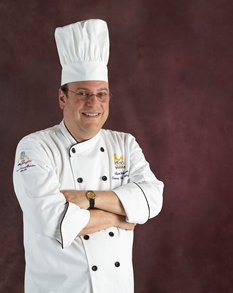 Students want to be assessed. It appeals to their emotions and egos. Find ways to assess them beyond merely awarding a letter grade.