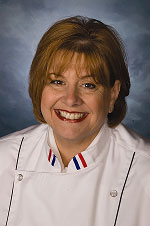
 Renee Zonka, RD, CEC, CHE, managing director and associate dean of the School of Culinary Arts at Kendall College, has been inducted into the Chicago chapter of Les Dames d’Escoffier International (LDEI), an organization of woman leaders in the food, beverage and hospitality industry.
Induction into LDEI is by invitation only. Named for legendary French chef, restaurateur and culinary writer Georges Auguste Escoffier, Les Dames d'Escoffier inspires women to develop their leadership skills in culinary professions.
LDEI, established in 1986 and based in Louisville, Ky., has more than 1,500 members in 27 chapters across the United States and Canada. Through chapter fund-raising efforts, nearly $4 million has been awarded in grants and scholarships and other philanthropic endeavors that support women in their career goals and provide funding for community-based services.

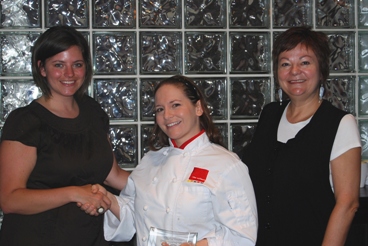 Olson Communications, a full-service agency that specializes in delivering innovative marketing-communication strategy to its portfolio of select food-industry clients, announces the winning recipient of its third-annual 20th Anniversary Chefs of Tomorrow™ grant program for culinary educators.
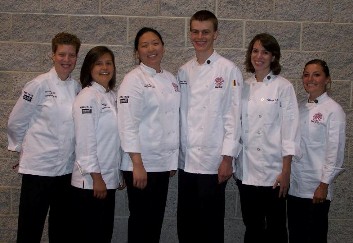 A team of five students enrolled in the School of Culinary Arts at Kendall College, Chicago, beat three other finalist teams to win the National Baron H. Galand Culinary Knowledge Bowl and earn gold medals at the American Culinary Federation's (ACF) 2010 National Convention in Anaheim, Calif., August 2.
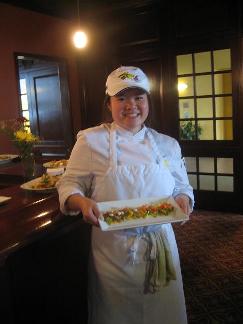 Students at Drexel University’s Hospitality Management, Culinary Arts and Food Science Program demonstrated championship form during the Fresh Hass Avocado Student Recipe Competition held in Philadelphia June 3. Twelve semi-finalists vied for cash awards with original and inspired fresh avocado recipes. Jessica Leung (pictured), a junior in the culinary-arts program, took first place and $750 with Avocado Plantain Trio, a creative twist on the classic chip-and-dip appetizer.
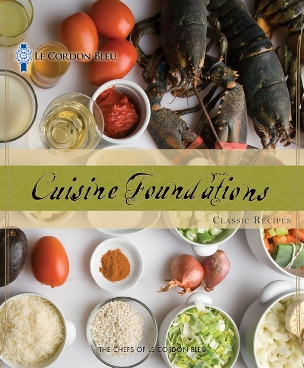 Le Cordon Bleu and Delmar, part of Cengage Learning and a leading provider of learning solutions for ongoing career development and education, announces two landmark culinary publications: Le Cordon Bleu Cuisine Foundations, the definitive guide to classic French culinary technique (Hardcover ISBN-13: 1435481372, $59.95) and Le Cordon Bleu Cuisine Foundations Classic Recipes, available in softcover and also spiral for easy kitchen use (Softcover ISBN: 1111306877; Spiral ISBN: 1435481380, $24.95).
 McCormick For Chefs™–Food Away From Home Division announces the launch of its new
 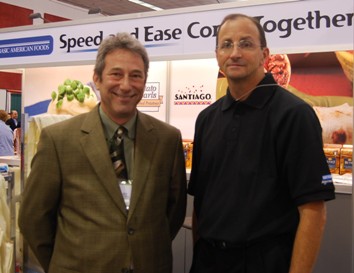 At NACUFS, Basic American Foods introduced innovation and fun on the menu with mini and regular-size “savory cupcakes” in two varieties: Bacon Hashbrown Cupcakes made with Golden Grill Russet™ Premium Hashbrown Potatoes and Buffalo-Chicken Meatloaf Cupcakes featuring Potato Pearls® EXCEL Original Recipe Mashed Potatoes. Prepared by PCI’s Chef Laurie Lindrup from supplied recipes, the “cupcakes” earned wide acclaim among college and university foodservice managers throughout NACUFS’ two-day trade show.