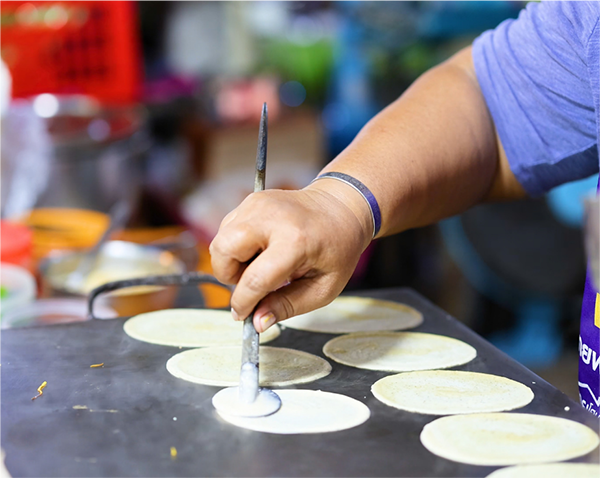
 My travels in Japan inspired me to switch around one of my (frankly) lackluster breakfast lessons: pancakes. Many, if not all, of my students have made pancakes before they walked into my classroom. But breakfast batters are a competency I must teach even though it always seemed too easy for them. After going to Japan and learning how to make dorayaki, I had an answer to my problem.
Dorayaki is a street food where cooks usually slather a sweet red bean paste (anko) between two small pancakes. I updated my lesson plans by teaching students how to make dorayaki instead of traditional American pancakes as it’s more challenging.
The batter is thinner, somewhere between pancake and crepe batter, which means students must focus on their dexterity in a new way when they flip the pancakes. There is also a higher sugar ratio in the batter, which means students must hyperfocus on heat control to ensure the pancakes cook all the way through without getting too dark too fast.
The students do not make the traditional anko filling because we do not have the proper equipment. However, I do purchase an authentic premade filling from Amazon. This means the students taste an authentic product - without any travel costs! I insist on using the traditional anko filling because it also challenges their previously decided concept of a dessert. Many are left gobsmacked when I tell them we are having beans for dessert! 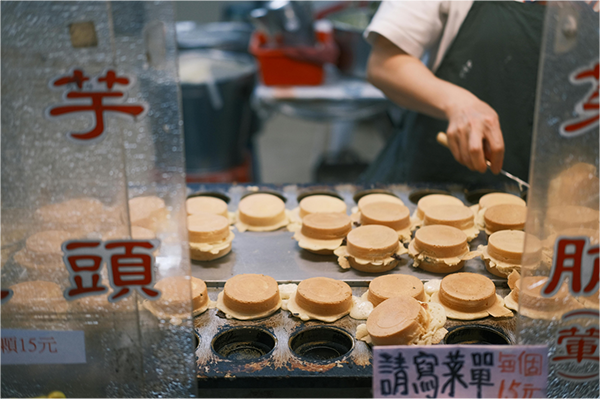
If anko does not fit in your budget, you could certainly fill the pancake with something else or let students get creative with their fillings. (Pro Tip: Because these pancakes cook slowly, I split my teams so that one baker is focused on cooking the pancakes, while their partner is working on another assignment. They switch roles halfway through to eliminate wasted time.)
After students work (and, frankly, struggle) through the dorayaki flipping, I show them a video of street vendors cooking the dish. This is not to make the students feel inadequate of course, but to show them that skills take time and can be mastered with practice.
Another inspiration I had after leaving Japan was sharing with my students the concept of elevated presentations. I thought it would be especially relevant to my students who may one day own their own bakery. I thought we could begin with our own catering events and quickly landed on updating the most intricate and formal of all our events - Teacher’s Retirement Celebration. (Pro Tip: If you make it 30-plus years in public education, you deserve a helluva party!) I wanted to try and emulate the feeling of sophistication of the Japanese Patisserie shops, but without spending an exorbitant amount of money.
I looked at so many premade display products but ultimately felt uncomfortable pulling the trigger on the expensive items. I am lucky enough to have a program that earns a lot in fundraising, but I always want to spend money on ingredients and new equipment for my students. I had to get creative and make my Japanese-inspired product presentation.
At Walmart, I found this set of square shelves I knew I could use as modern risers. In full disclosure, they aren’t the sturdiest things in the world and we will have to be very careful with them. I bought four sets, which gave me multiple options with multiple heights. Then, I removed the glass shelves from our bakery case to use as platters. If you don’t have one, you could certainly purchase something like what I have at Lowes or another home improvement store. I purchased circle and square mono portion boards to complete the look and eliminate smudges on the glass.
I can tell you this really changed how our client perceived our desserts. While we do change the menu from year to year, the general format is the same and I would say that the quality this year was similar to past years, but our clients were OVER THE MOON about how much better our pastries were. Perception is everything! My next step is to find a way to add underlighting to this display. (If you have any ideas, hit me up on Instagram!)
Whether it’s recreating a beloved street food item or making your product look so fancy you might need to hire a security guard, Japan is a place full of inspiration. I hope these lessons give you ideas that can help improve your curriculum and your product presentation.
Next month, I am excited to tell you all about my final experience traversing the Far East, which landed me in Central Asia’s Uzbekistan."
Click here to view the first installments of “Envisioning the Future of Baking and Pastry Arts Through an International Lens."