In the ever-changing restaurant scene, world cuisine establishments are dominating the landscape. Over the years, once-prevalent European continental restaurants, with heavy emphasis on classic French culinary techniques and ingredients, have given way to the global reach of ethnic cooking styles from regions and countries in Asia, Latin America, the Mediterranean and elsewhere.
In my World Cuisine class at Ozarks Tech – and previously in my apprentice training role as an executive chef – I stress the importance of examining world cuisine through the lens of three perspectives: authentic, in the style of, and fusion. Why is this important and what is the difference between the three?
These concepts are important for both culinary students in training, chefs and restaurant operators alike due to the importance of clearly communicating the type of food offered. The distinction is also important when detailing specific dishes served on special event menus or as tasting menu options.
Furthermore, the concepts can be used when chefs are developing new menu items. By considering how the dish will be described, and what unique ingredients will be used in its preparation, a more focused approach can be adhered to – which can also spark creativity in the recipe development process. Consider the following discussions of the three types of world cuisines:
Authentic: Of the three types, authentic is perhaps the most touted yet also the hardest to achieve.
- Difficult to execute
- Items to consider: point of origin, specific ingredients, and whether it is prepared by a native to the country
- Perception of the guest is often different than the chefs
In the style of: A more useful and descriptive way to categorize world cuisine dishes.
- Prepared with commonly found ingredients from the area
- Main ingredients are familiar to the American consumer
- Can be integrated with fusion-style cooking
- Example: Pan Asian, which is defined as “of or pertaining to all Asian peoples.”
Fusion: Although popular, it can be problematic if executed incorrectly and may or may not work well in certain markets. Recall the well-known description “confusion fusion.”
- May be defined as two distinctly different global cuisines brought together into a new style of cooking or a specific dish
- Some examples: French and Thai, Japanese and Spanish, Chinese (China) and South American
- Not everything works together
- Success requires: the best ingredients; keeping the food’s integrity; making sure flavors complement each other; not overwhelming consumers with too many cuisines; and it requires education to stay true to core guest preferences.
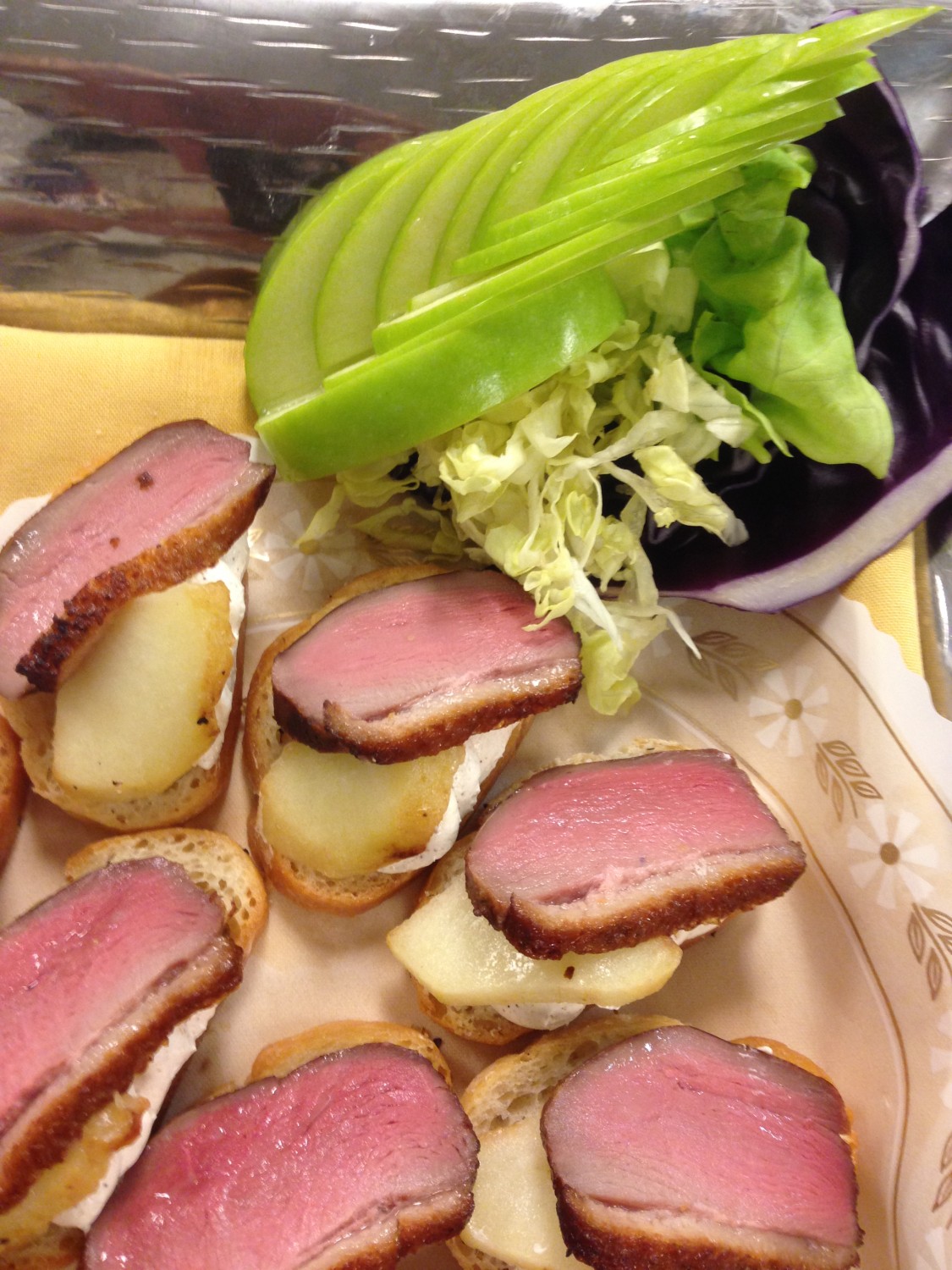
I created a Chinese fusion creation made with traditional Chinese ingredients, which uses a classic Szechuan smoking technique done with tea. Tea smoked duck canape with sauteed apples and honey 5-spice butter is what I would consider to be a fusion concept using the French-style finger food, canape, along with butter and baguette croustades – and combining the Chinese traditional tea smoking and well-known ancient five-spice blend.
Tea Smoked Duck Canap
- Used in Hunan and Szechuan cooking
- 1 part tea, 1 part rice, ½ part sugar
- Intense quick hot smoke 5 to 8 minutes for breast
- You can add flavor with orange zest and spices
- Canapé is a fusion concept, and the carrier can be made with wonton cups instead of the baguette croustades used in this image
- Chinese five-spice blend (both heating and cooling elements) represents Yin and Yang
- Chinese five-spice blend may include star anise, fennel, cassia, Szechuan pepper, cloves, cardamom, ginger and licorice root
Here are three dishes that could be considered in the style of and fusion concepts.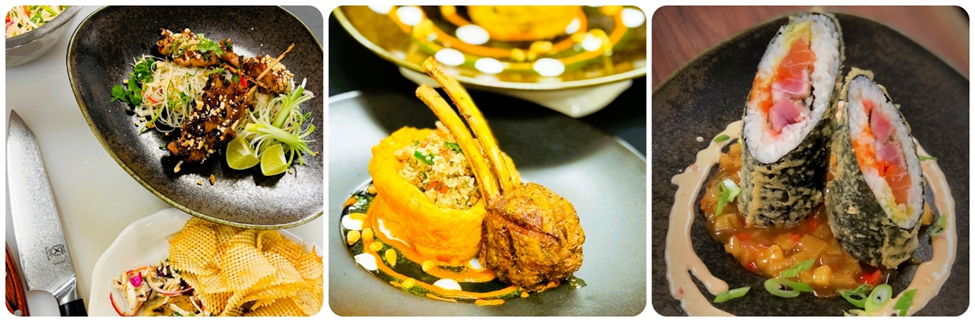 Left to right are:
Indonesian Style Pork Sates with Peanut Sauce on Asian Rice Noodle Salad
Indian Style Lamb Chop and Garam Masala Scented Lamb Basmati Rice with Pine Nuts
Pan Asian Fried Tuna Futomaki Roll on Spicy Pineapple Sweet and Sour Sauce with Sweet Thai Chili Mayo
World cuisine is, and will continue to be, a major segment in many modern restaurants and dining establishments. To be successful, I stress to my students to consider the three aspects of authenticity, in the style of, and fusion to categorize global flavors and concepts when communicating and developing cooking in the ethnic variety of world cuisine.
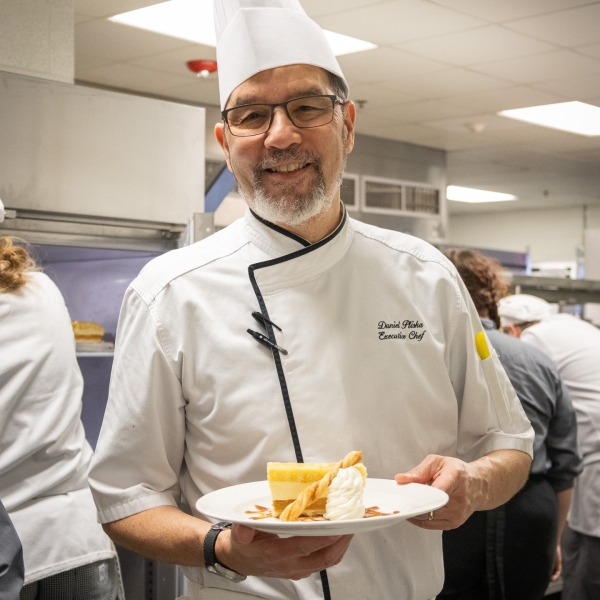
Chef Daniel Pliska brings 49 years of distinguished culinary and pastry experience to the next generation of chefs as the Savory Chef Instructor at Ozarks Technical College in Springfield, Missouri. After decades of working in and leading prestigious kitchens across the U.S. and Europe, Chef Daniel now dedicates himself to shaping future culinary professionals through expert instruction, mentorship, and real-world insight.
Chef Pliska’s new website and blog, www.chefpliska.com, contains recommendations, articles, blog posts and links to past published articles, videos and podcasts. The site focuses on traditional cooking and pastry techniques.